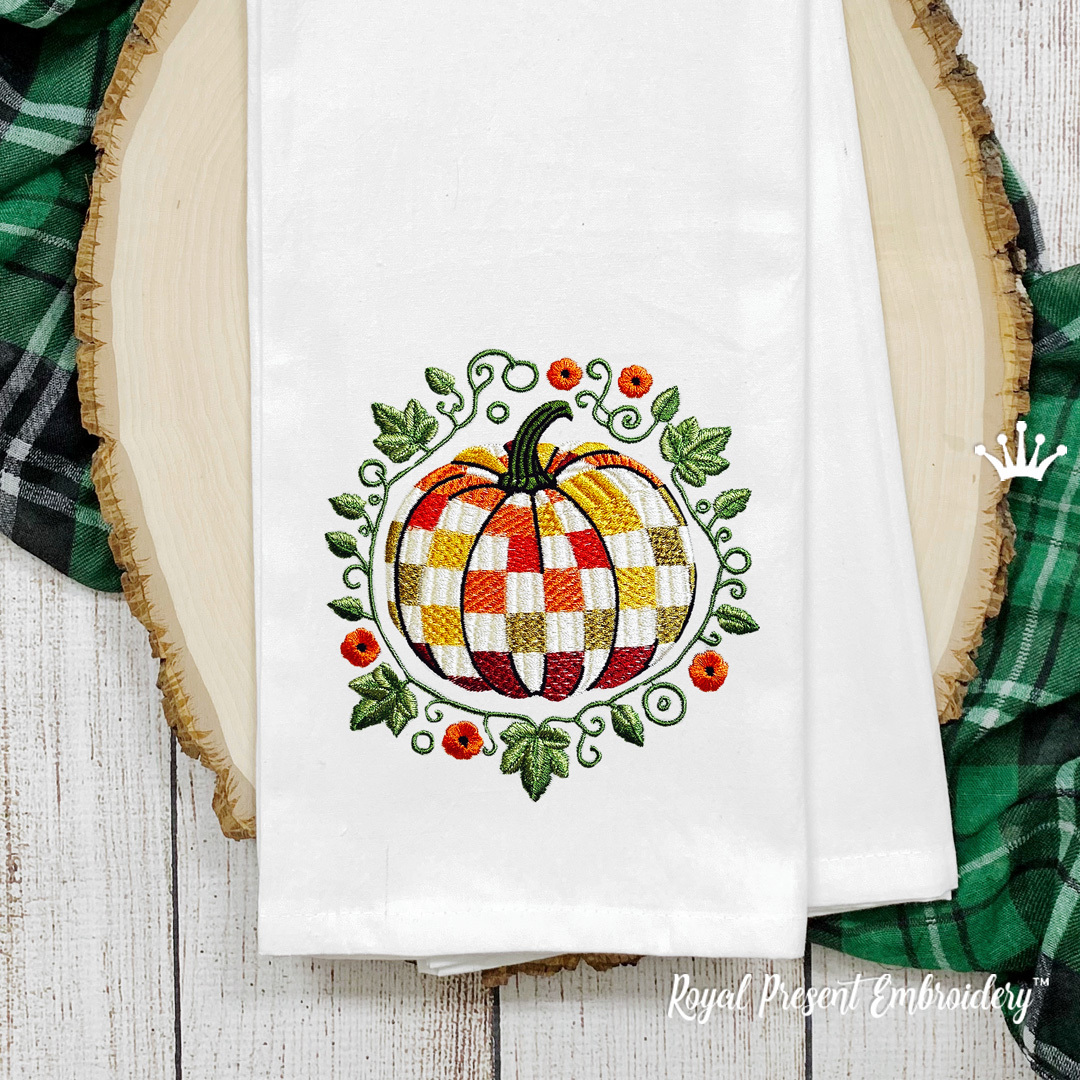
Checkered Pumpkin with Ornament Machine Embroidery Design - 3 sizes
By knowing the speed of your embroidery machine, you can find out how long it will take to embroider a design.
To use the embroidery calculator, click on the number of stitches in the product description.
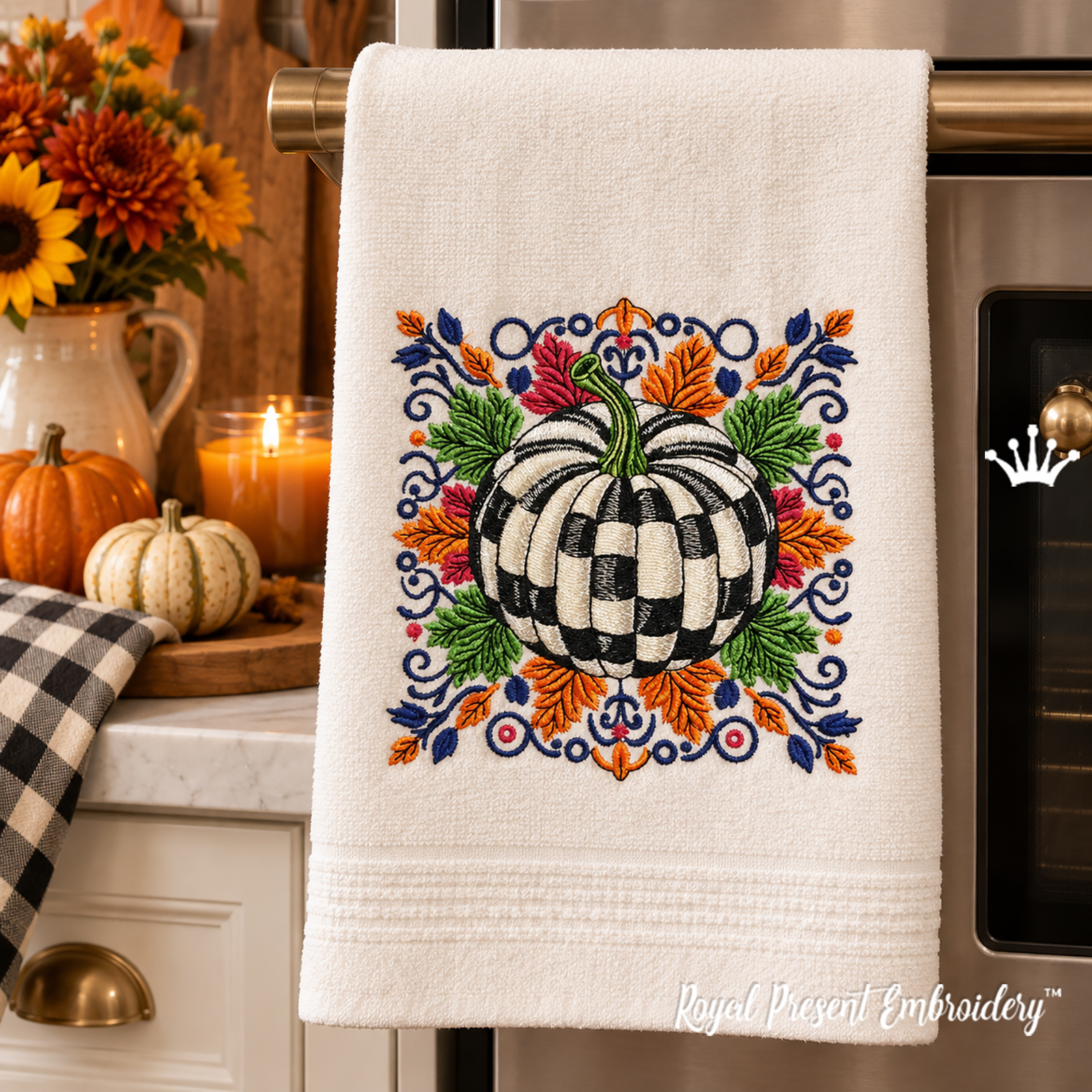
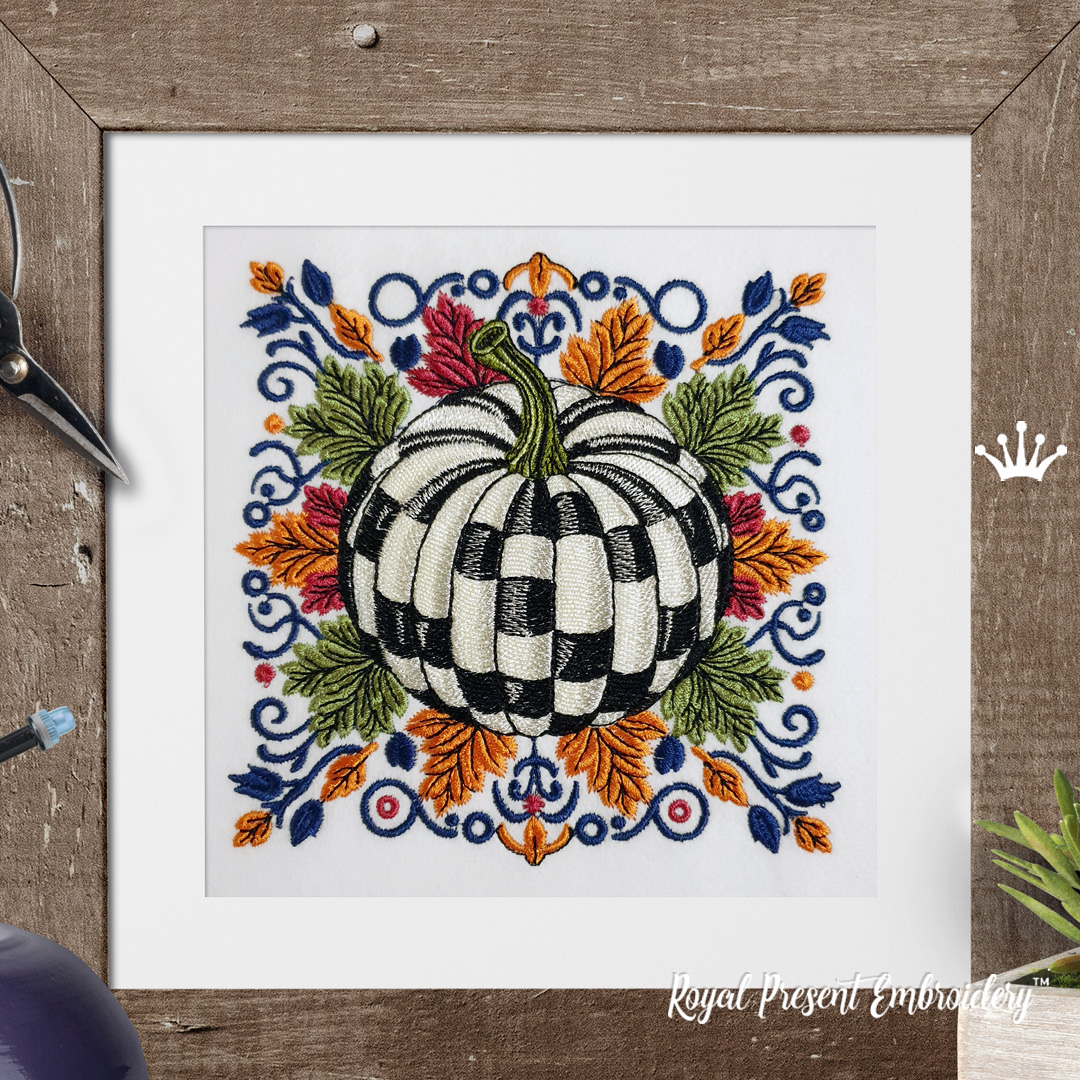
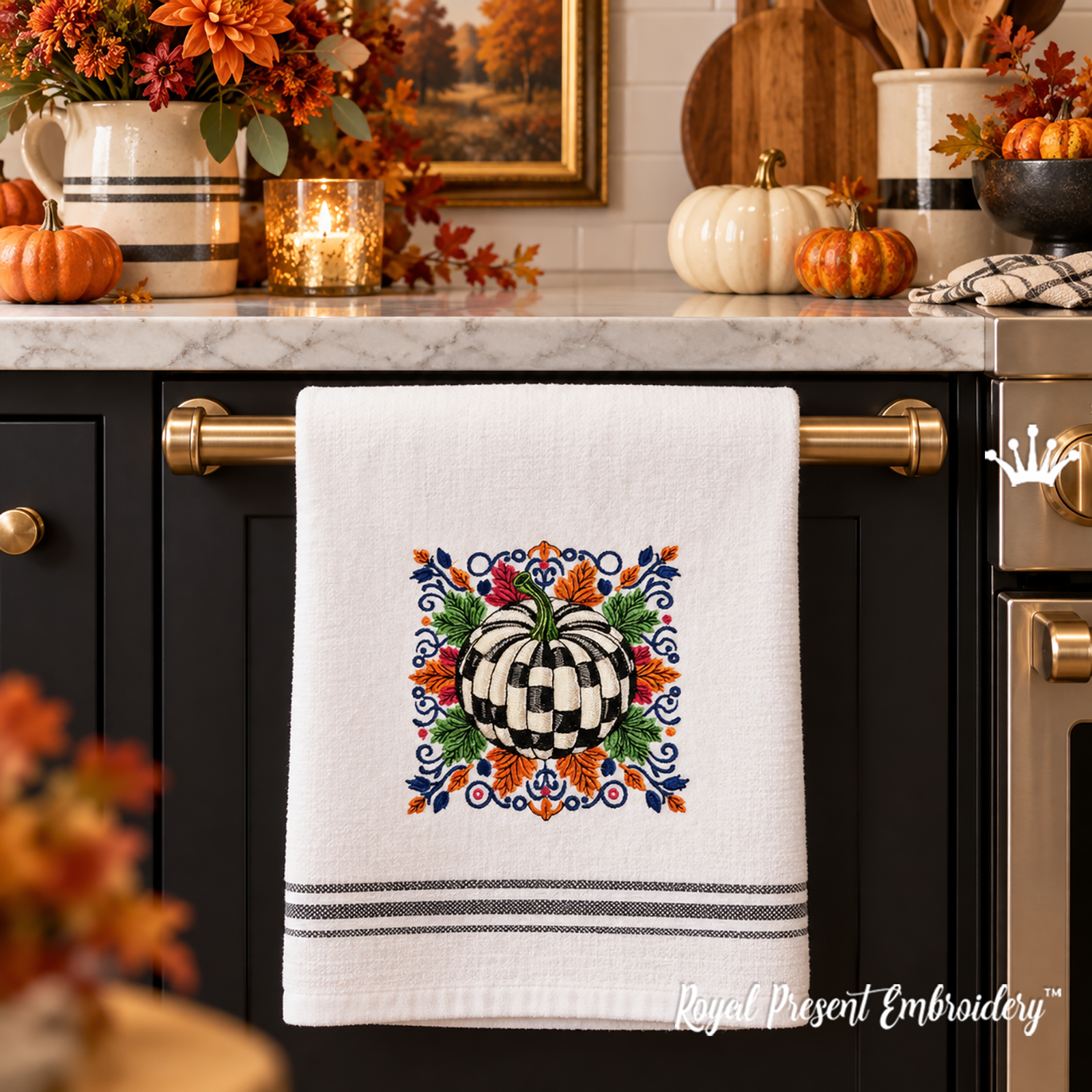
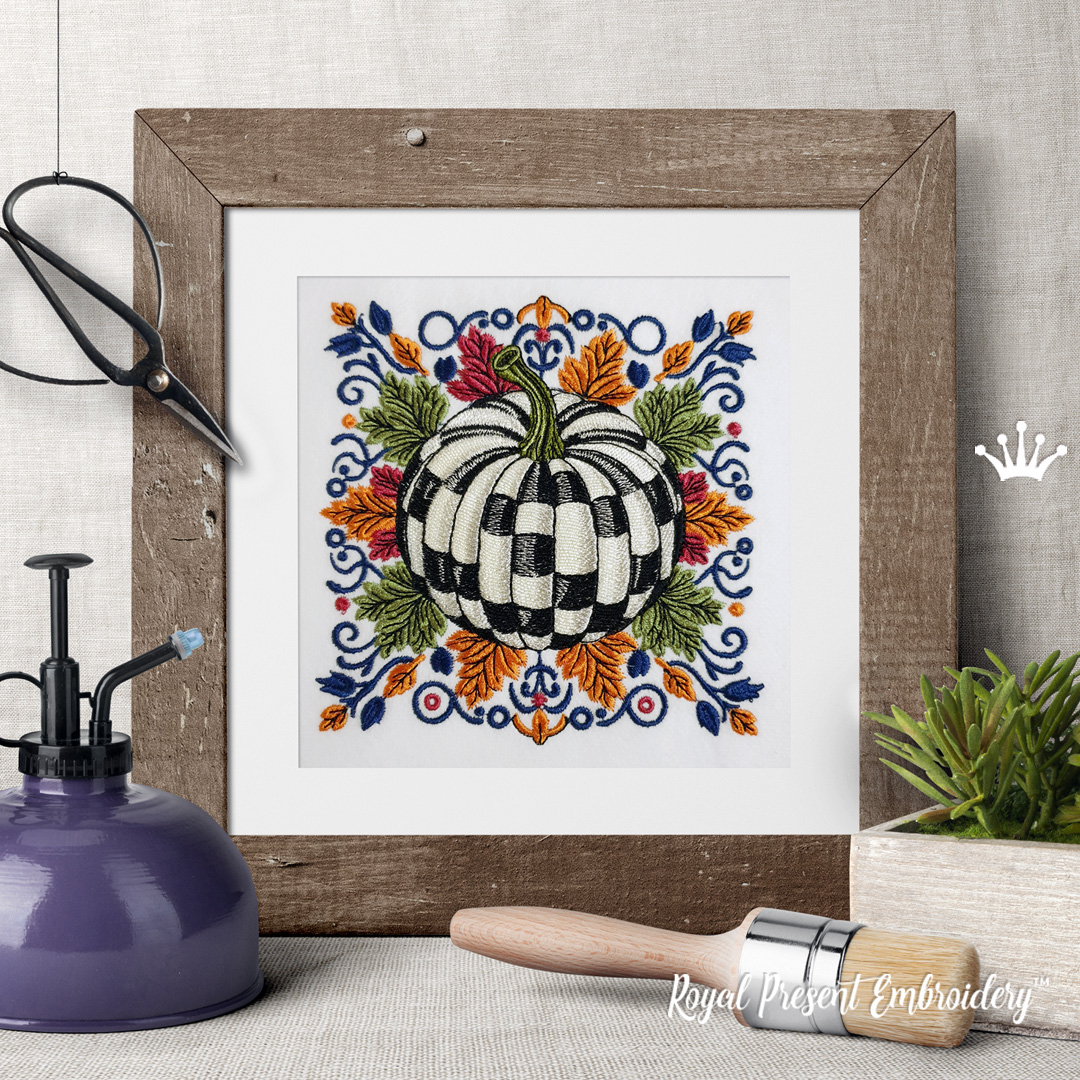
Checkered Pumpkin with Colorful Ornament is a downloadable machine embroidery design, not a finished embroidered item. The composition features a dimensional black-and-white checkerboard pumpkin framed by symmetrical scrolls, golden and burgundy leaves, olive foliage and a green stem. It combines modern geometry with decorative fall details without a scary Halloween look.
Size: 128.2x129.3 mm (5.05x5.09"), Stitches: 55000
Size: 138.3x139.4 mm (5.44x5.49"), Stitches: 60300
Size: 148.3x149.5 mm (5.84x5.89"), Stitches: 65600
Formats: .dst, .jef, .pec, .vip, .hus, .pes, .exp, .sew, .dat, .vp3, .xxx
After purchase, you receive a ZIP archive containing files for embroidery machines. Fabric, thread, stabilizer and a finished product are not included. An embroidery machine and a method for transferring files to it are required.
Minimum Hoop Sizes
For the 128.2x129.3 mm (5.05x5.09") file: use a 130x180 mm (5x7 in) hoop or larger.
For the 138.3x139.4 mm (5.44x5.49") file: use a 140x200 mm (5.5x7.9 in) hoop or larger.
For the 148.3x149.5 mm (5.84x5.89") file: use an embroidery field of at least 150x150 mm (6x6 in); a 160x260 mm (6x10 in) hoop also works.
Madeira Classic Color Chart
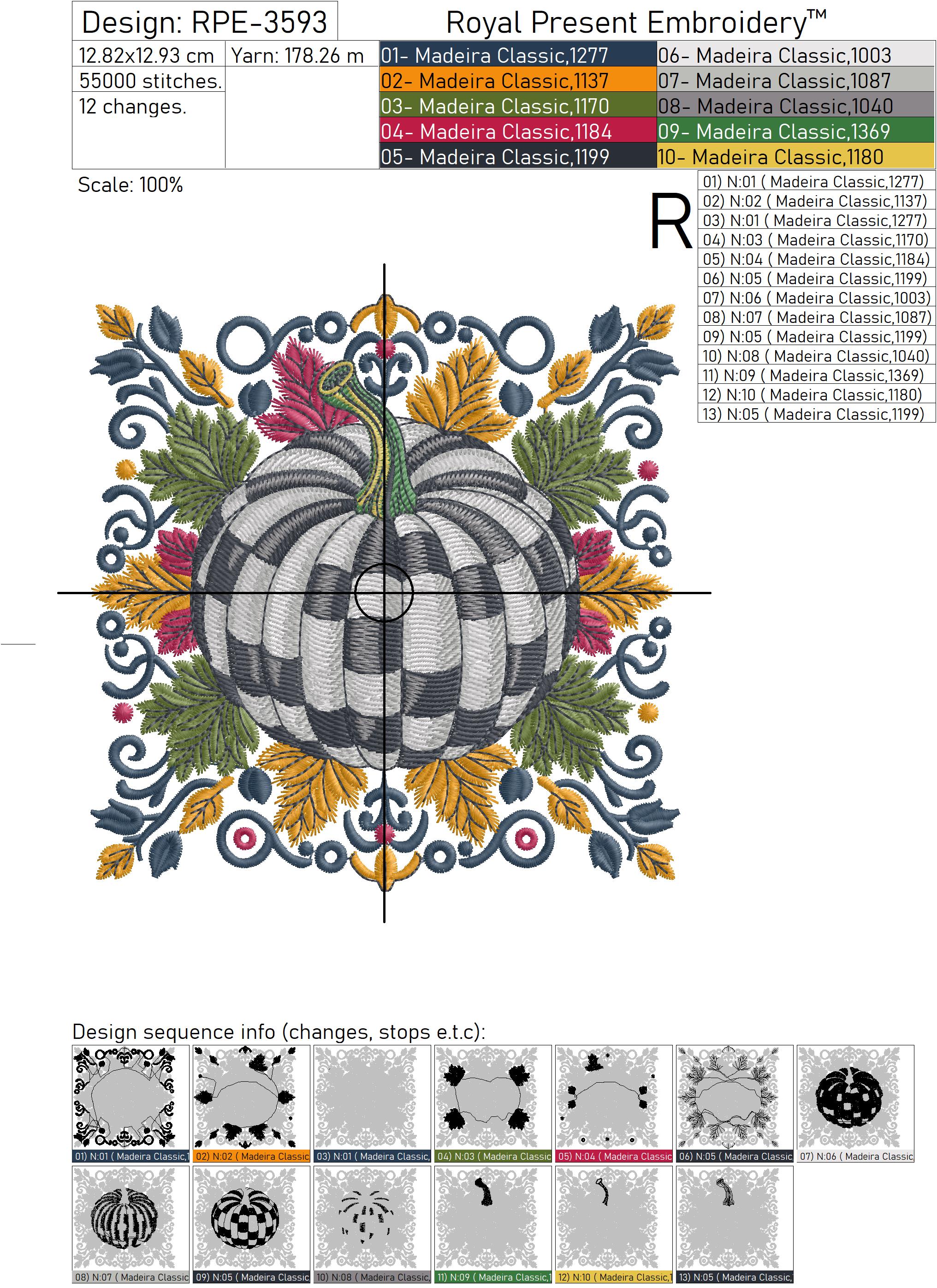
The design uses 10 thread colors and 12 color changes. The swatches are approximate; use the Madeira number and a physical thread chart for exact color matching.
| Color | Madeira Classic | Design area | |
|---|---|---|---|
|
|
1277 | slate-blue ornamental scrolls | |
|
|
1137 | golden-orange leaves | |
|
|
1170 | olive-green foliage | |
|
|
1184 | burgundy leaves and accents | |
|
|
1199 | dark checks, outlines and final details | |
|
|
1003 | light pumpkin checks | |
|
|
1087 | light-gray ribs and transitions | |
|
|
1040 | gray shading | |
|
|
1369 | green stem | |
|
|
1180 | gold details and accents |
Stabilizing This Dense Design
The supplied files contain 55,000–65,600 stitches, so the fabric needs firm support. For stable cotton, linen, twill and home-decor fabric, use a medium- to heavyweight cut-away stabilizer of approximately 60–80 gsm (about 1.8–2.4 oz/yd²). Suitable options include Madeira Weblon Cut Away, Gunold Cut Away and Sulky Cut-Away Plus. More details about weights and applications are available in Cut Away Stabilizers in Machine Embroidery.
If the item cannot be hooped or the embroidery sits close to an edge, secure the fabric on Madeira Cotton Fix or Gunold Filmoplast Strong. A light adhesive sheet should not be the only support beneath this dense design; add cut-away backing when the test sew-out shows movement or puckering.
For terry cloth, add Madeira Avalon Film, Gunold Solvy Film or Sulky Solvy as a water-soluble topping. Topping keeps the small details above the loops but does not replace the cut-away backing underneath.
A practical test setup is quality 40 wt embroidery thread, a size 80/12 embroidery needle and a machine speed of about 550–650 stitches per minute. A size 75/11 needle may be tested on fine, stable woven fabric. Final needle choice depends on the fabric, stabilizer and thread.
Keeping the Symmetrical Ornament Aligned
- Mark the vertical and horizontal axes on the fabric and align them with the hoop center.
- Hoop woven fabric on the grain without stretching it; distortion is immediately visible in the checks and paired scrolls.
- Use a basting box when your machine or software provides this function.
- On lightweight fabric, test two cut-away layers placed with their fibers in different directions.
- Run the complete design on matching test fabric with the same backing, needle and thread before embroidering the finished project.
If the test shows waves, wrinkles or outline displacement, follow the diagnostic steps in Prevent Puckering in Machine Embroidery.
Color Combination Tip
For a restrained interior palette, keep the pumpkin black and white and stitch the surrounding ornament in two related olive and gold shades. Retain the burgundy accents for a richer fall version. Strong value contrast between the light and dark checks is essential because it keeps the checkerboard pattern readable.
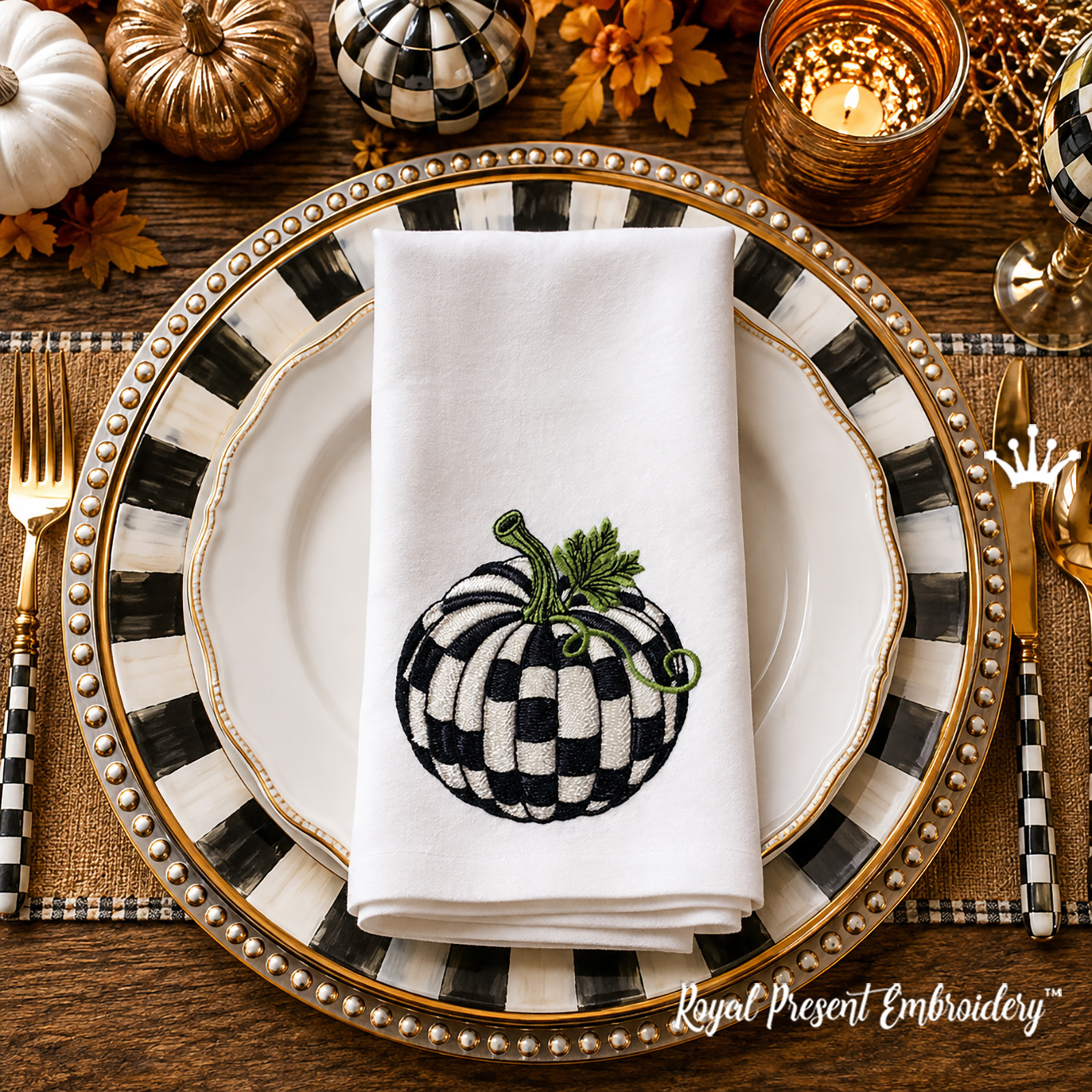
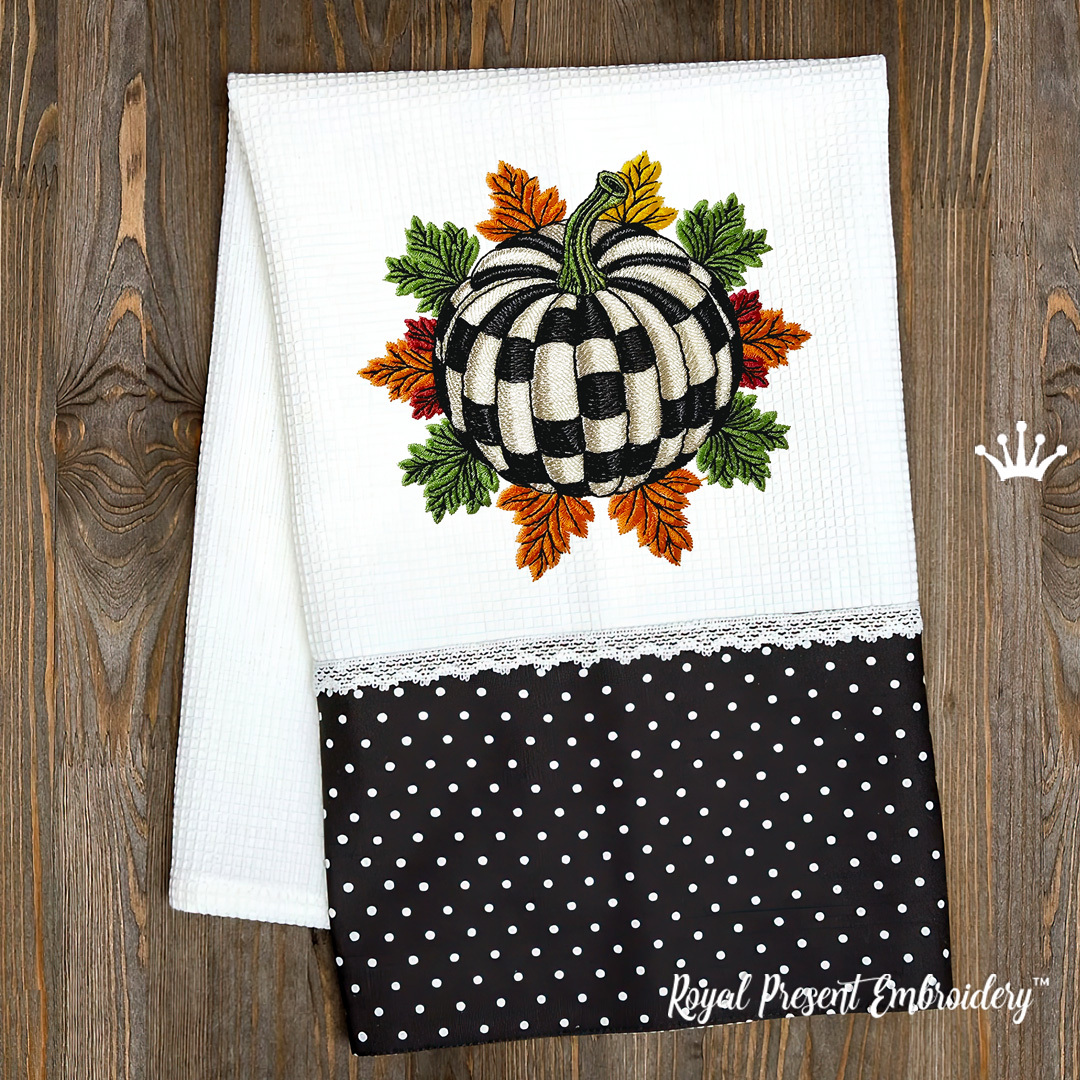
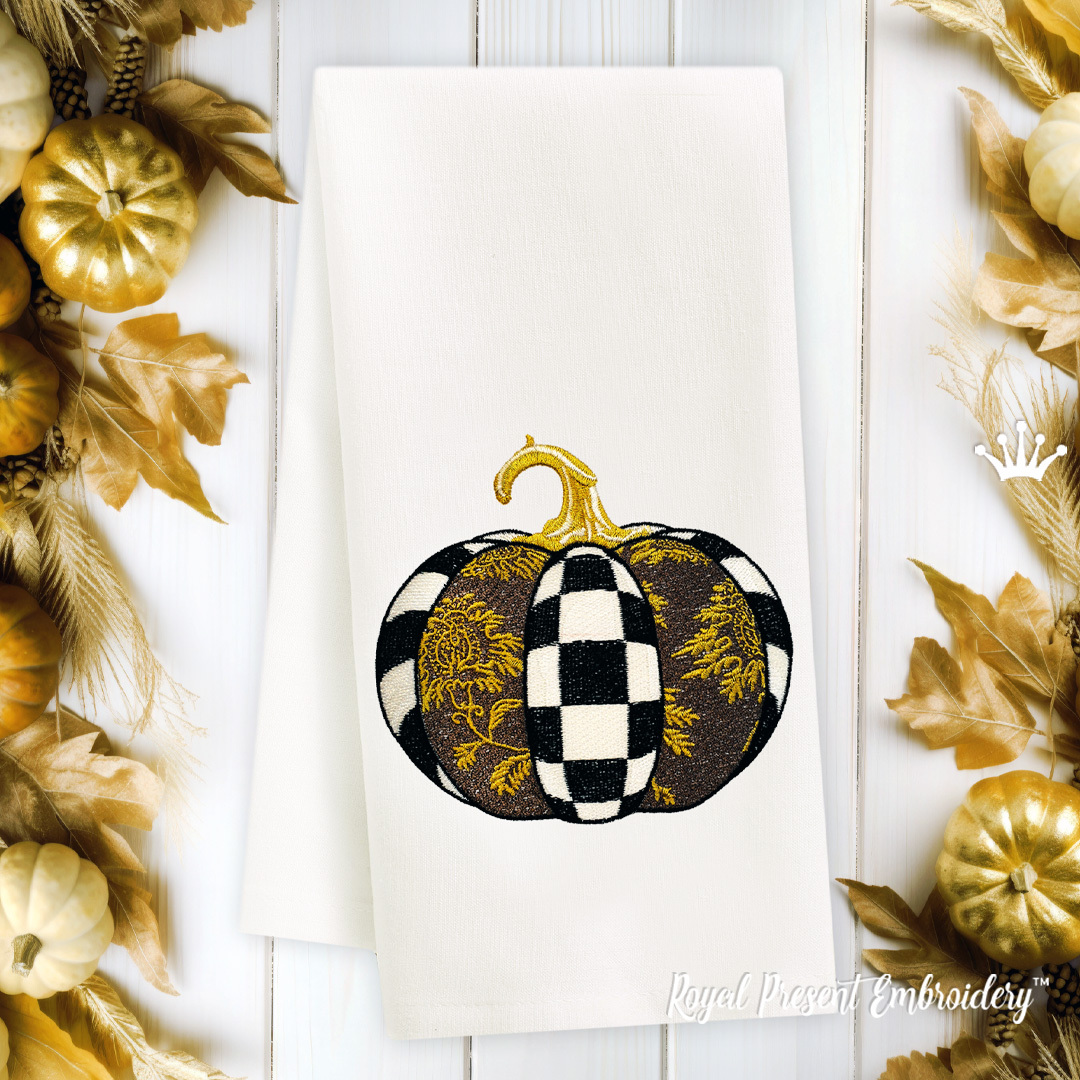
More Checkered and Baroque Pumpkin Designs
|
|
|
|
Technical Questions
Can I use tear-away stabilizer by itself?
Tear-away is not recommended as the only backing for this densely filled design. Once removed, it no longer supports the fabric, which can allow outline displacement or rippling around the embroidery. Use approximately 60–80 gsm (about 1.8–2.4 oz/yd²) cut-away; test two crossed layers on lightweight or easily distorted fabric.
What should I check if the outlines shift away from the fills?
First check for fabric movement in the hoop, a loose hoop screw, play in the hoop attachment and insufficient backing. Add a basting box, use a second cut-away layer when needed and reduce machine speed. If the same displacement remains on a stable test sew-out, then inspect the file. The relationship between stitch density, fabric and backing is explained in Perfecting Stitch Density, Fabric, and Stabilizer Balance.
Why does the fabric ripple after unhooping?
If the fabric remained flat while stitching but rippled after release, it was probably stretched during hooping. If waves appeared while the fill was still sewing, the backing was too light or the fabric was too soft for the stitch load. Do not pull the fabric drum-tight; repeat the test with a heavier or additional cut-away layer.
How should I stitch this design on terry cloth?
Use cut-away backing underneath and a lightweight water-soluble film on top. The film holds outlines and small details above the loops but does not reinforce the fabric from below. Avoid very thin towels because a large filled design can make them stiff, and run a complete test on terry of the same weight before stitching the finished item.
Checkered Pumpkin with Ornament Machine Embroidery Design - 3 sizes
Sewed out beautifully! Wish it were available in a larger size.
Checkered Pumpkin with Ornament Machine Embroidery Design - 3 sizes
Great pattern
Checkered Pumpkin with Ornament Machine Embroidery Design - 3 sizes
Great pattern

 Get Sign-In Link
 Login with Google
 Login with Facebook
 Login with Amazon
 Login with Paypal