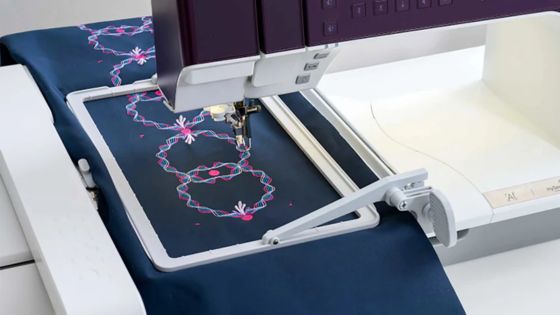
By knowing the speed of your embroidery machine, you can find out how long it will take to embroider a design.
To use the embroidery calculator, click on the number of stitches in the product description.
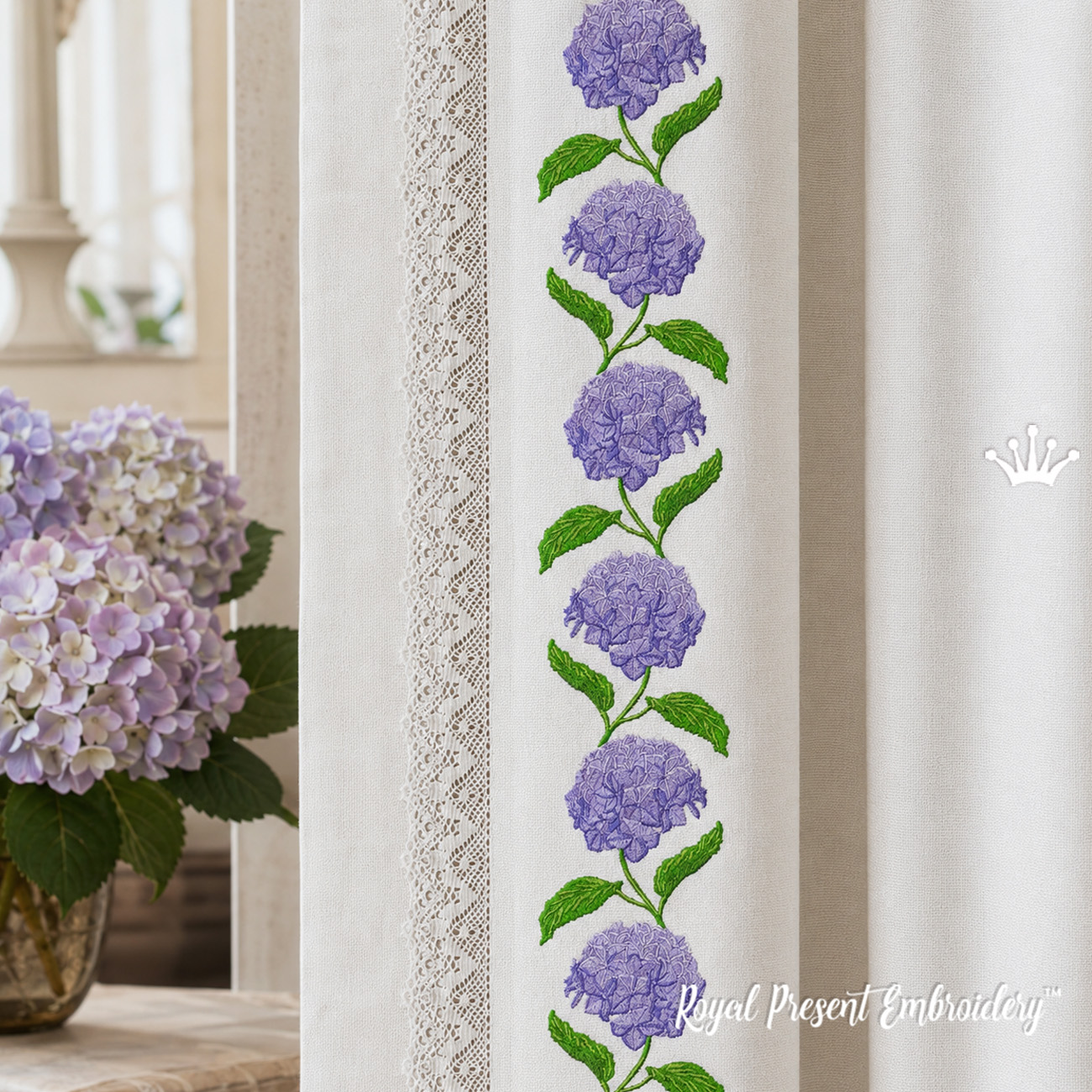
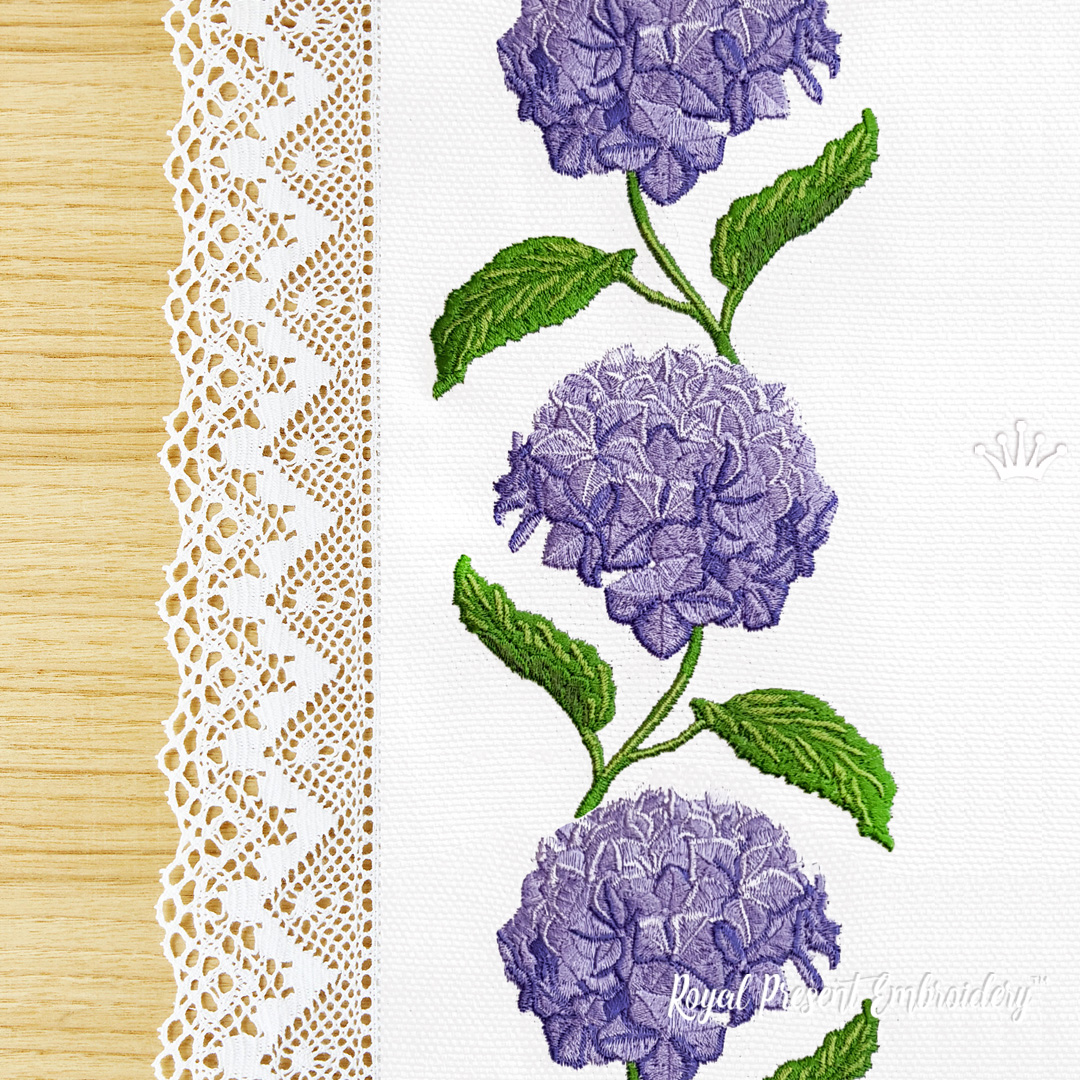
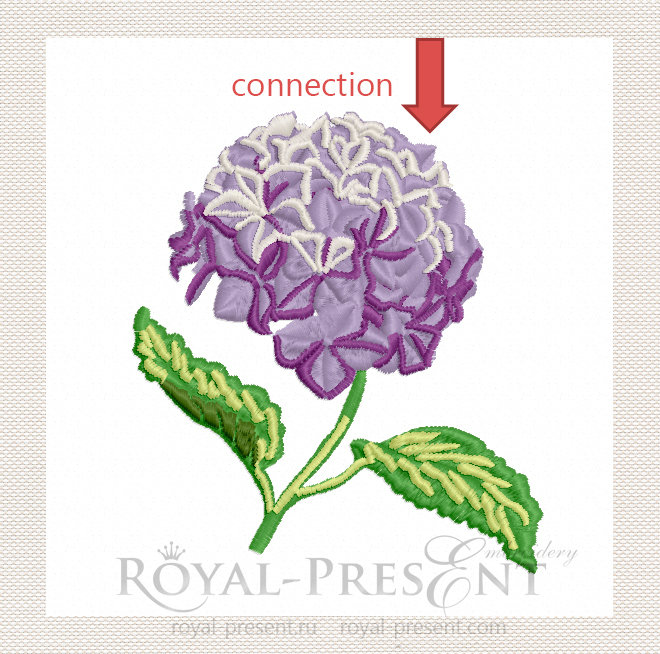
Hydrangea Endless Border Machine Embroidery Design is a floral border design for embroidery machines. Use this hydrangea border on tablecloths, table runners, napkins, towels, curtains, aprons and decorative home projects.
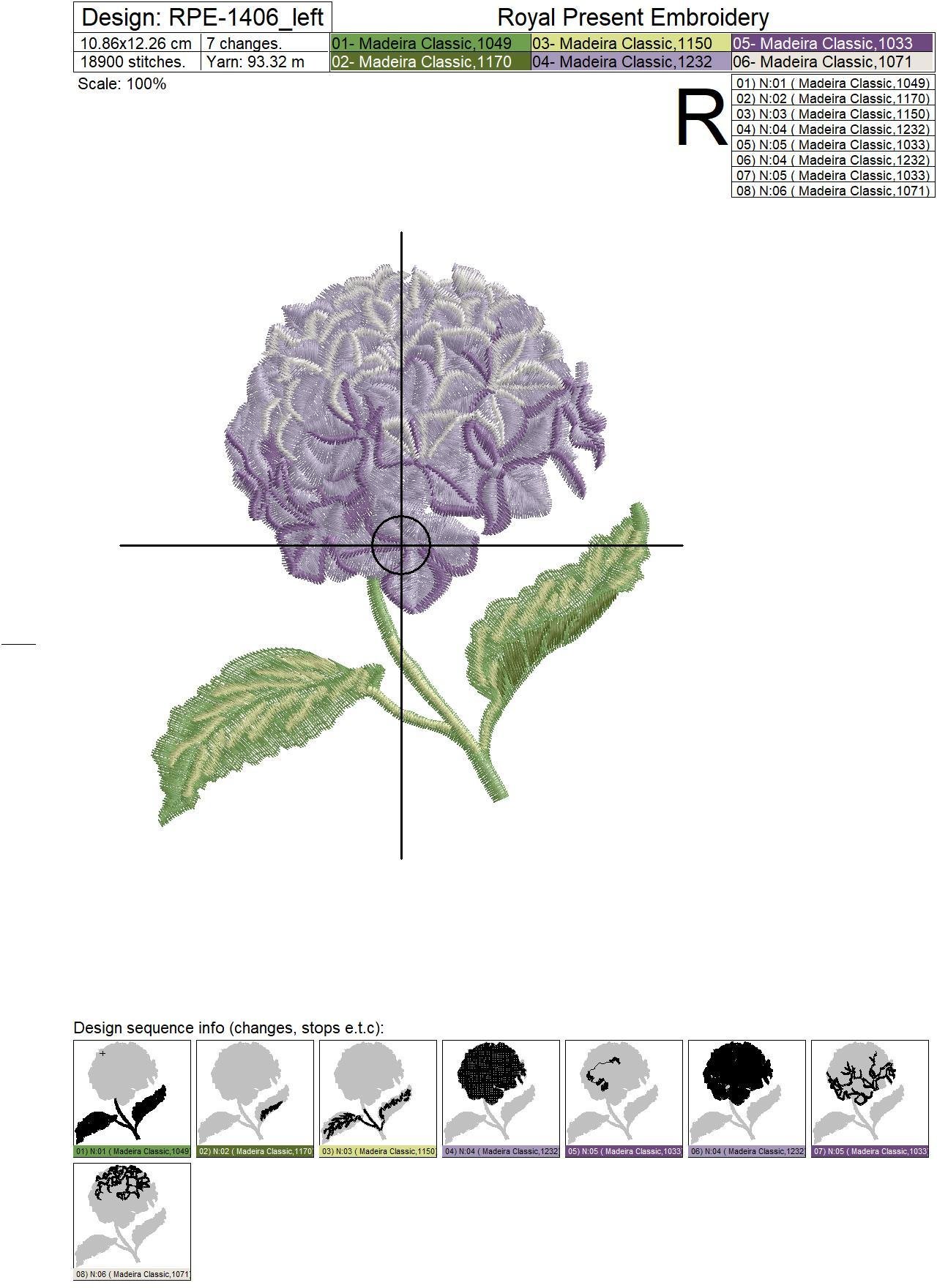
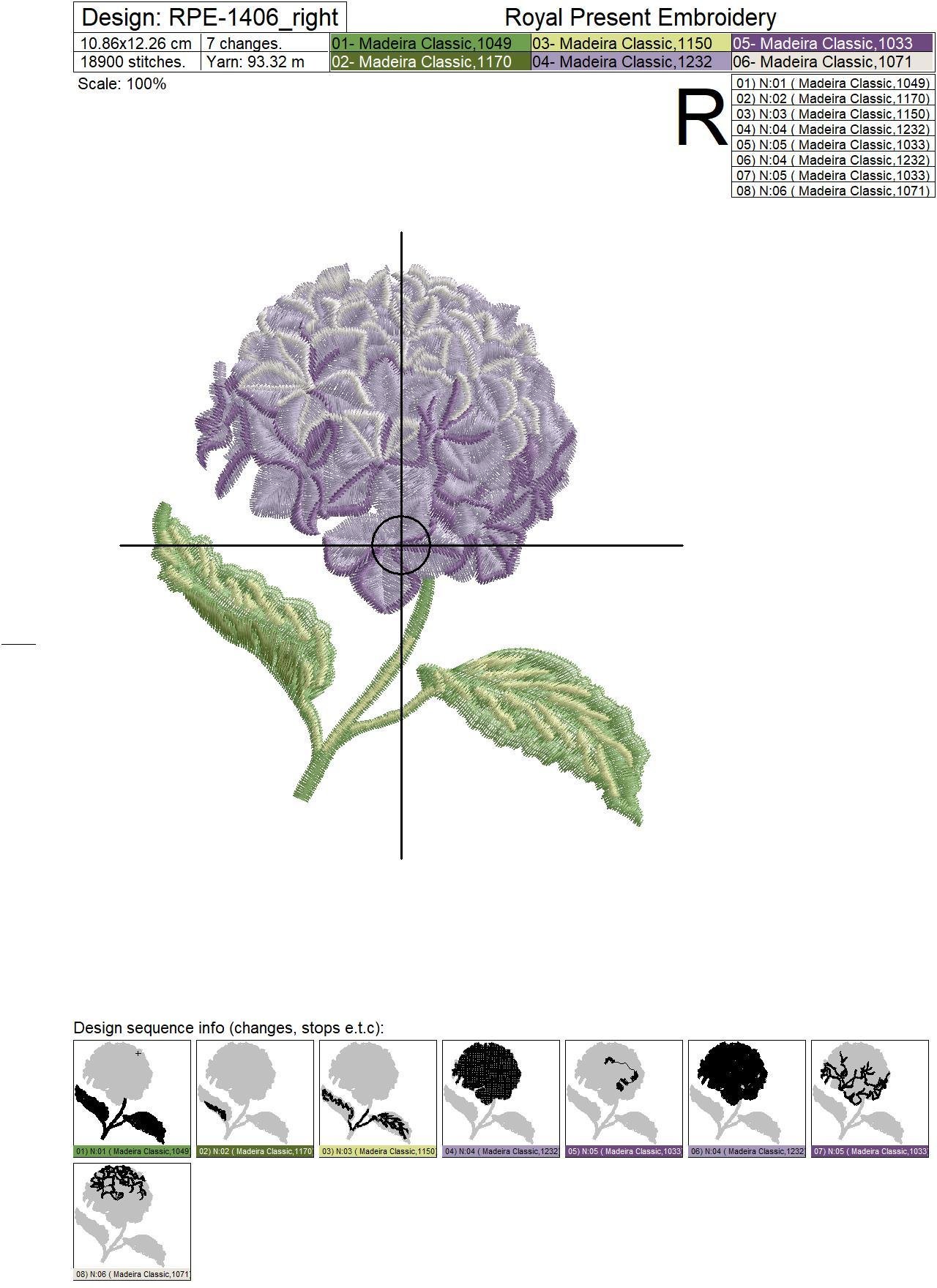
Size: 108.6x122.6 mm (4.28x4.83 "), Stitches: 18919
Formats: .dst, .pec, .vip, .hus, .pes, .exp, dat, jef, .vp3, xxx, tab
Hydrangea endless border for tablecloths, runners and towels
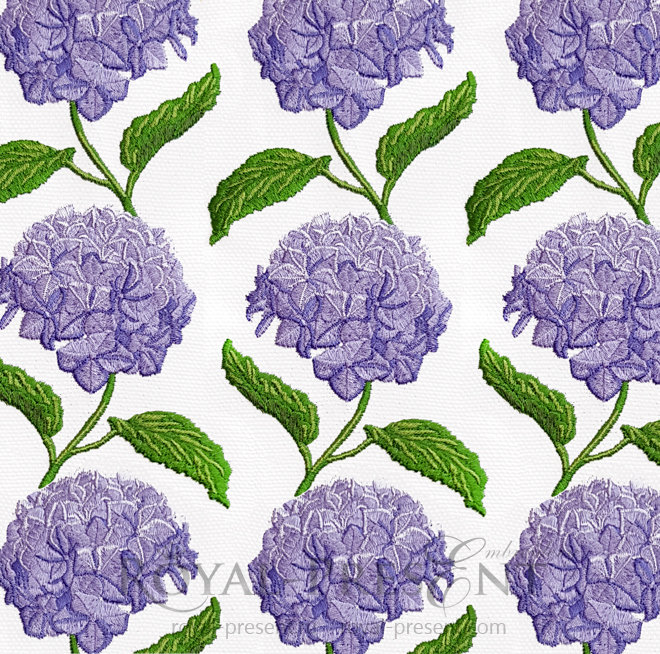
Hydrangea Endless Border Machine Embroidery Design is a floral border design for embroidery machines. The long border layout makes it useful for projects where the embroidery should run along an edge, hem or repeated line.
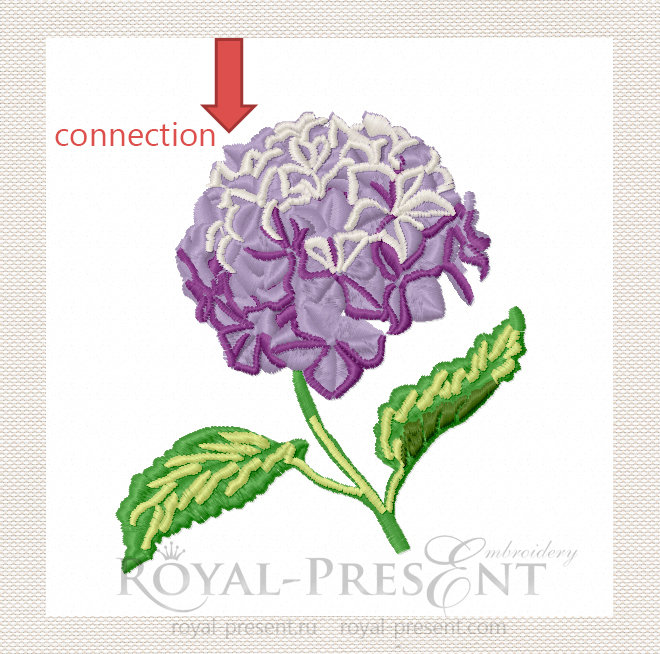
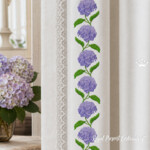
This hydrangea border works well on tablecloths, table runners, napkins, smooth towels, curtains, aprons and floral home decor. The design includes alignment marks, which help when repeating the border on longer fabric areas.
Use this design when you need a continuous floral decoration rather than a single flower, bouquet or corner motif. For long projects, accurate marking and careful rehooping are more important than speed. Yes, boring little marks save beautiful expensive fabric — rude, but true.
Where to use this hydrangea border design
- Tablecloths: repeat the border along one edge or use it as a floral frame for table linen.
- Table runners: place the border along the side, both ends or as a repeated decorative line.
- Napkins: use the border near one edge of linen or cotton napkins.
- Towels: stitch the border along the lower edge of smooth kitchen towels, tea towels or hand towels.
- Curtains: use the design along curtain edges or valances on stable woven fabric.
- Aprons: add the hydrangea border to apron hems, pockets or lower edges.
How to align an endless border
Mark the fabric before hooping and keep the border parallel to the edge of the project. After stitching the first repeat, rehoop the fabric carefully and align the next repeat with the start and end marks.
For long tablecloths, runners or curtains, test the repeat spacing on scrap fabric first. A border can look beautiful only when the line stays straight; even a small angle mistake becomes visible after several repeats.
Best fabric choices
- linen tablecloths
- cotton tablecloths
- table runners
- linen napkins
- cotton napkins
- smooth kitchen towels
- tea towels
- curtain fabric
- apron fabric
- medium-weight woven fabric
Fabric, thread and stabilizer tips
For cotton, linen and medium-weight woven fabrics, use tear-away or cut-away stabilizer depending on fabric weight, stitch density and how the item will be used. A useful starting formula is: stabilizer weight is about fabric weight divided by 3. For example, 150 g/m² fabric usually starts around 50 g/m² stabilizer; 6 oz/yd² fabric starts around 2 oz/yd² stabilizer.
For towels or textured fabrics, use water-soluble topping on top. It helps keep hydrangea petals, leaves and small border details from sinking into the fabric texture.
Hydrangeas can be stitched in blue, purple, lilac, pink, white, cream and green thread shades. If you stitch the border on dark, bright or patterned fabric, test the thread colors first so the flowers and leaves stay visible.
Useful links
Browse more continuous motifs in the Endless Embroidery Designs category. If you need a matching corner composition for table linens or napkins, see Hydrangea Corner Machine Embroidery Design. Before stitching a dense floral border, read Perfecting Stitch Density, Fabric, and Stabilizer Balance.
Before stitching
Check the listed design size, hoop area, fabric weight, border placement, stabilizer and thread colors before stitching the final item. For repeated borders, mark the fabric and test the alignment before working on the final tablecloth, runner, towel or curtain.
FAQ
What fabric works best for this hydrangea border?
Linen, cotton, table runner fabric, tablecloth fabric, napkins, smooth towels, curtain fabric and medium-weight woven fabrics work best. The fabric should be stable enough to hold a repeated border without stretching.
How do I align an endless embroidery border?
Mark the fabric before hooping, stitch the first repeat, then rehoop and align the next repeat with the start and end marks. For long borders, test the repeat spacing before stitching the final item.
How do I choose stabilizer weight?
Use this starting formula: stabilizer weight is about fabric weight divided by 3. For example, 150 g/m² fabric starts around 50 g/m² stabilizer. In oz/yd², use the same idea: 6 oz/yd² fabric starts around 2 oz/yd² stabilizer.
Should I use tear-away or cut-away stabilizer?
Tear-away stabilizer works well for stable woven fabrics such as cotton, linen, table runners, tablecloths, napkins and smooth towels. Cut-away stabilizer is better for softer fabrics, dense designs or items that will be washed often.
Can I stitch this border on towels?
Yes. Use it on smooth kitchen towels, tea towels or decorative hand towels. For terry towels or textured towels, add water-soluble topping on top so the petals and leaves stay clean.
Can I use this design on tablecloths or curtains?
Yes. This border is suitable for tablecloth edges, table runners, curtain edges and valances. Mark the stitch line and keep each repeat parallel to the fabric edge.
Which thread colors work best for hydrangeas?
Blue, purple, lilac, pink, white, cream and green shades work well for hydrangea embroidery. Test the colors on your fabric first, especially if the background is dark, bright or patterned.
How can I avoid puckering in a long border?
Do not stretch the fabric in the hoop, stabilize the full stitch path, keep the border aligned and test stitch the design on similar fabric. Long borders need careful rehooping and stable fabric support.
What if I cannot open the ZIP archive?
If the downloaded archive does not open on your device, use the Royal Present online unzip tool. After extracting the archive, choose the embroidery format for your machine.

 Get Sign-In Link
 Login with Google
 Login with Facebook
 Login with Amazon
 Login with Paypal