Ornate Mango Machine Embroidery Design – 2 Sizes
By knowing the speed of your embroidery machine, you can find out how long it will take to embroider a design.
To use the embroidery calculator, click on the number of stitches in the product description.
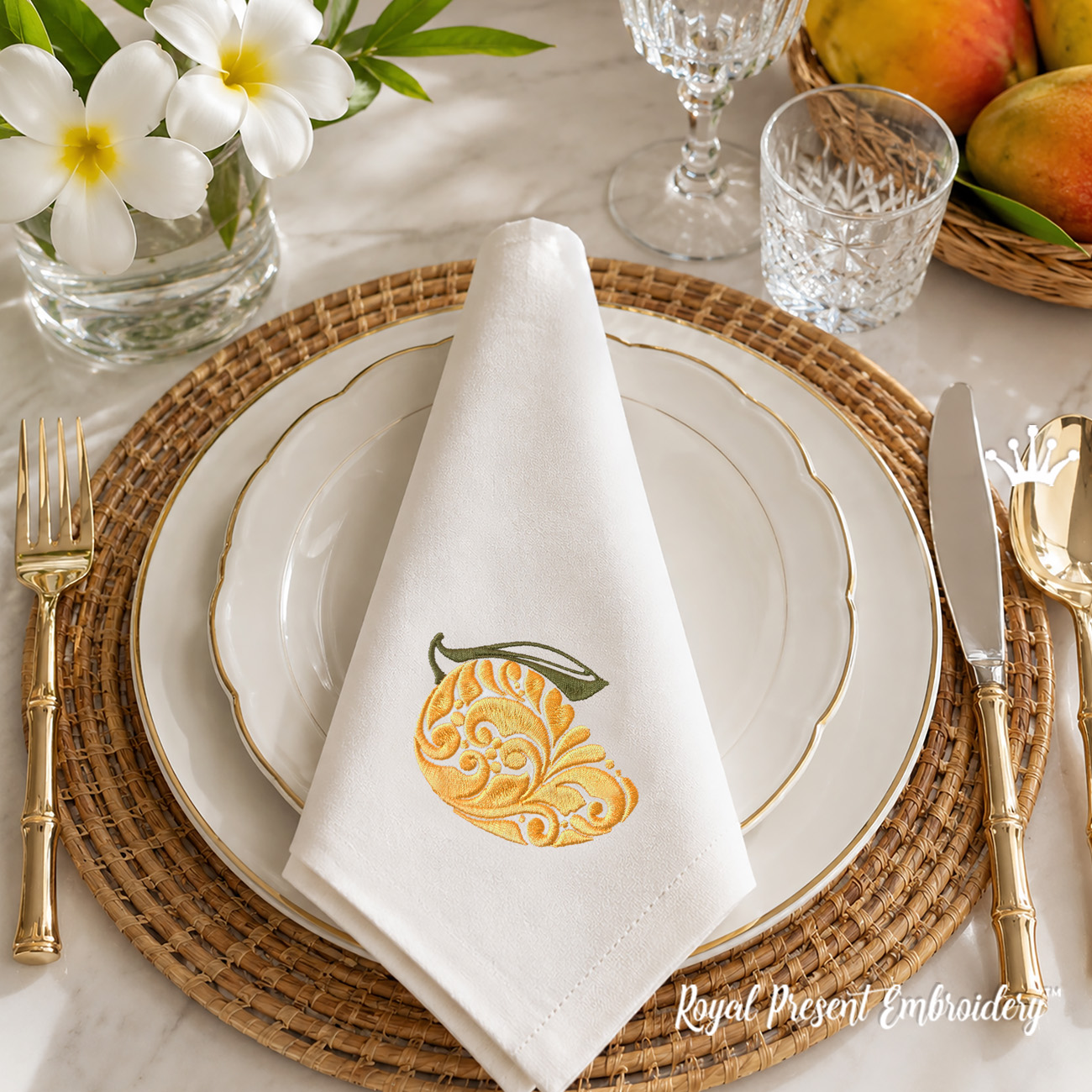
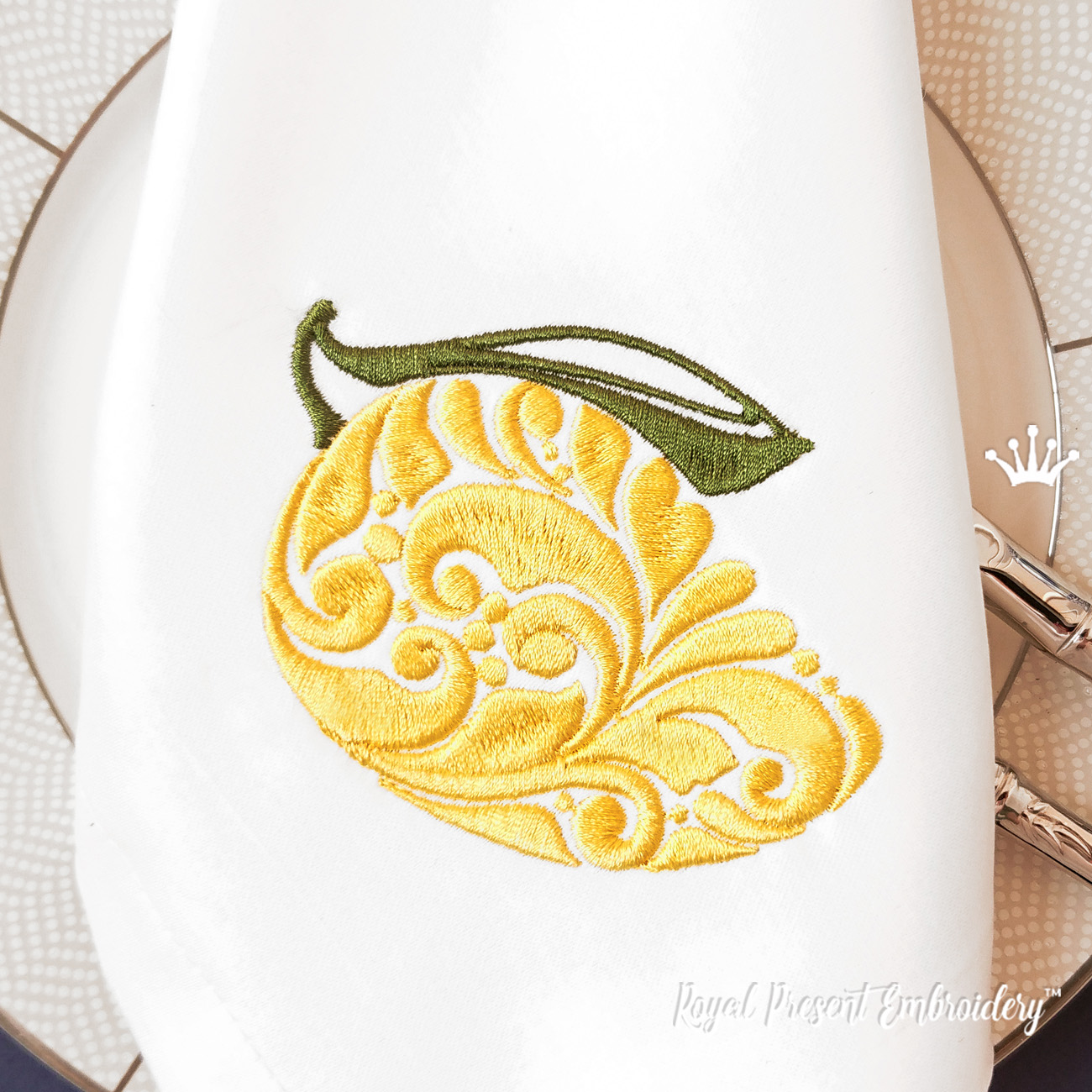
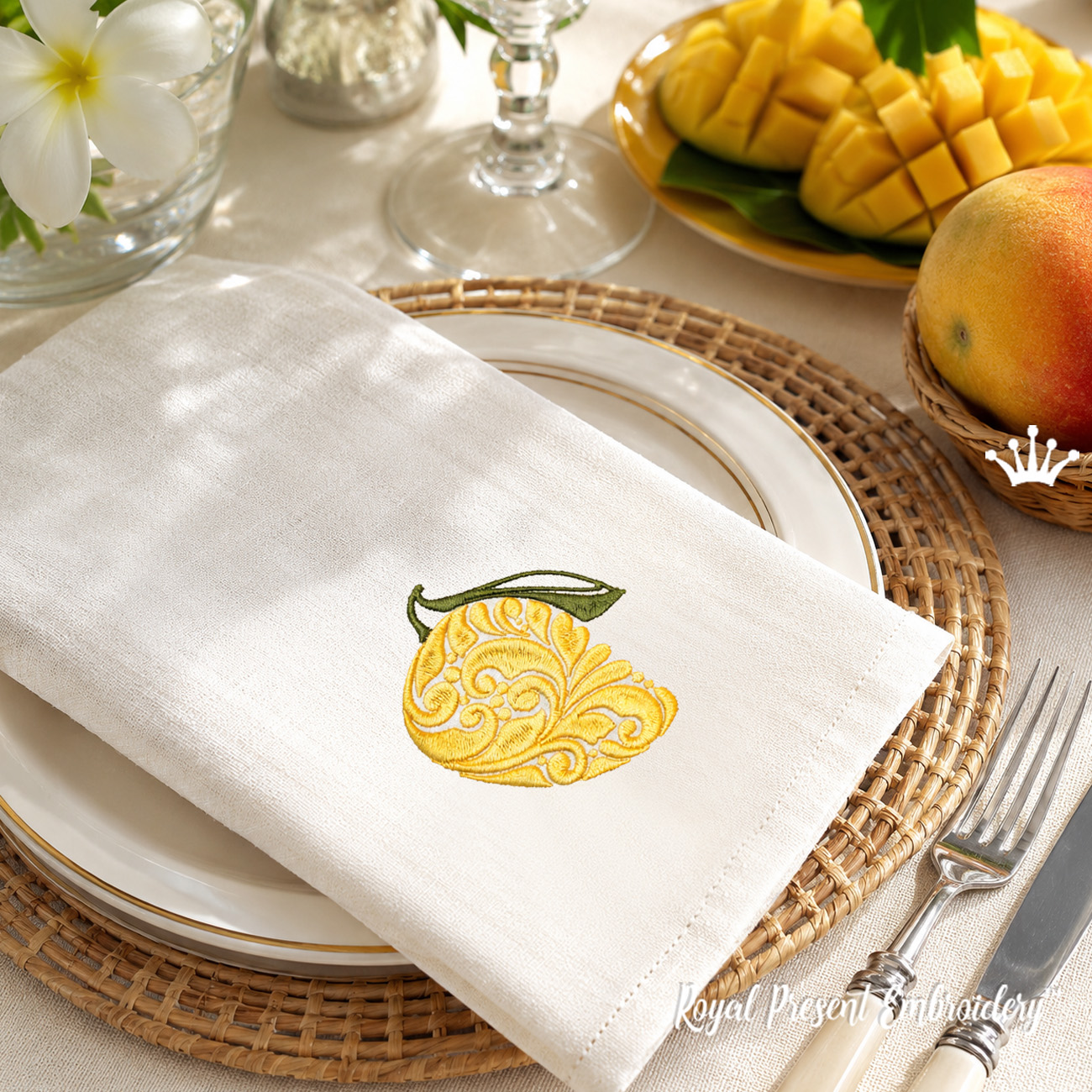
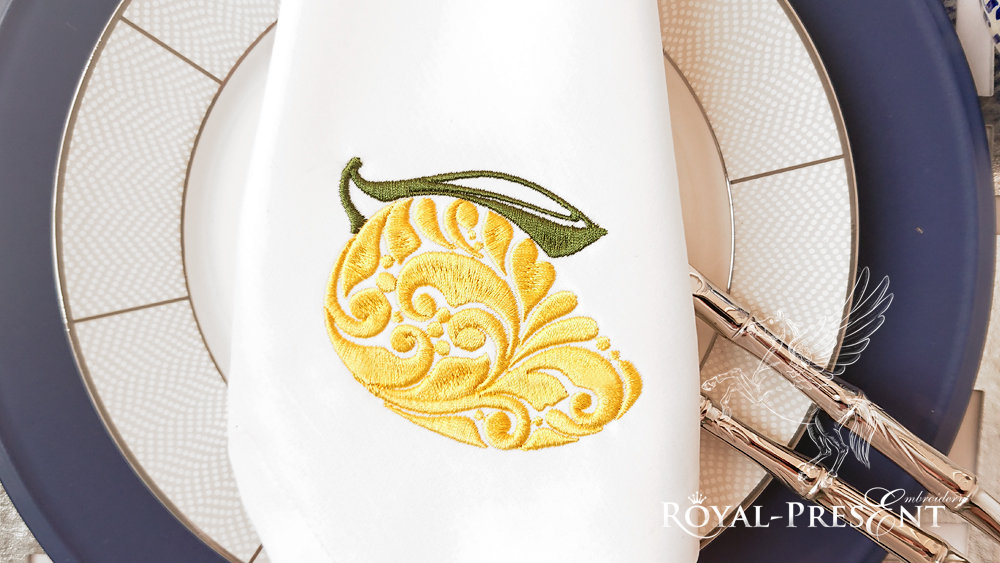
Ornate Mango Machine Embroidery Design combines the recognizable shape of a tropical fruit with elegant Eastern-inspired scrollwork. Two compact sizes make it suitable for small embroidery hoops, napkins, kitchen towels, summer clothing, bags and coordinated table linens.
This motif belongs to the Royal Present Ornate Embroidery Designs collection. It can be stitched as an individual accent or combined with matching ornamental fruits to create a coordinated kitchen, dining or tropical textile collection.
Mango is often associated with warmth, love, prosperity and hospitality. Golden yellow and orange threads highlight its tropical character, while the decorative curls give the fruit an elegant appearance suitable for both practical and decorative projects.
This listing contains digital machine embroidery files. A finished embroidered item is not included.
Design sizes and embroidery formats
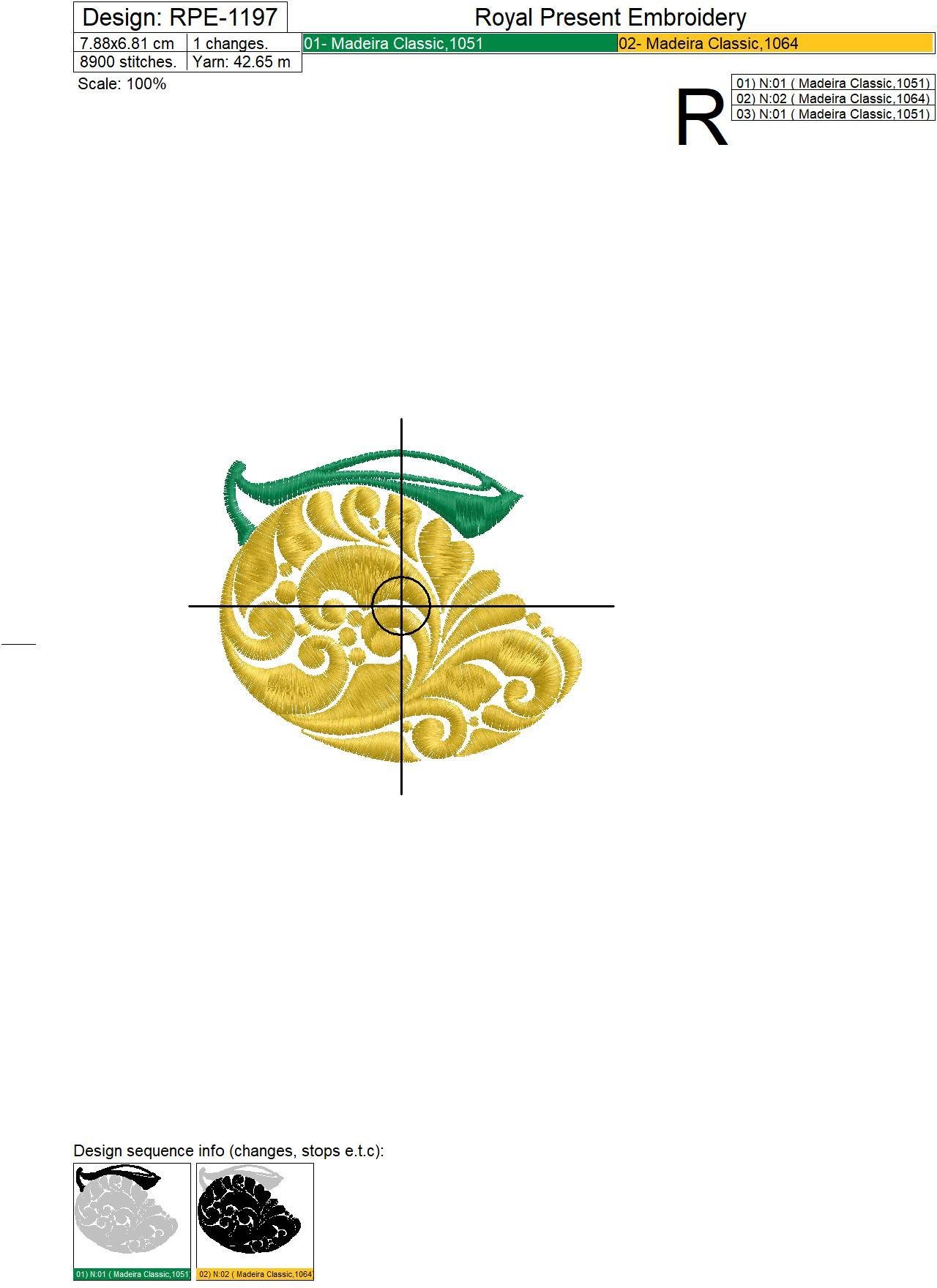
Size: 78.8x68.1 mm (3.10x2.68 "), Stitches: 8821
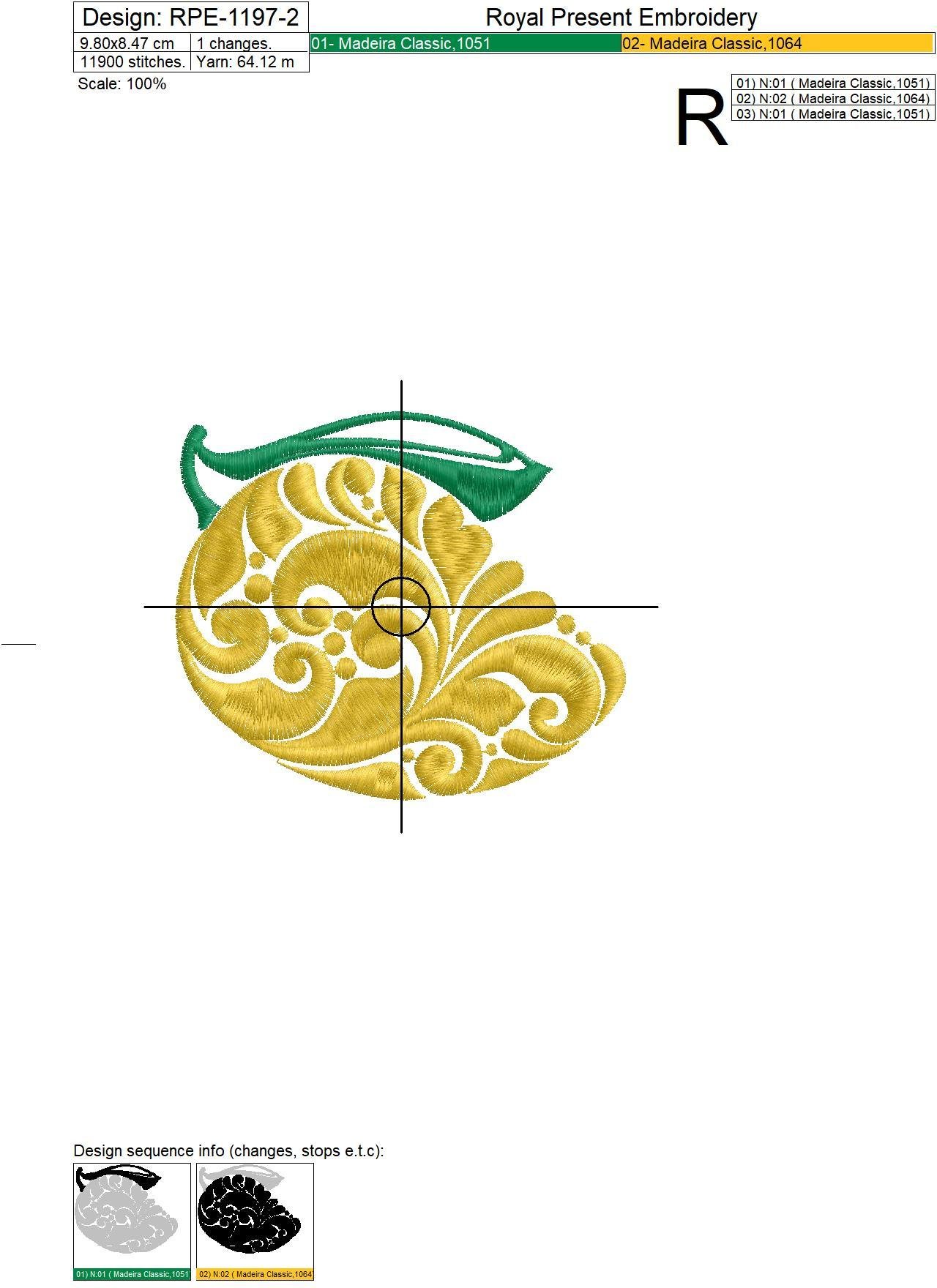
Size: 98.0x84.7 mm (3.86x3.33 "), Stitches: 11859
Formats: .dst, .jef, .pec, .vip, .hus, .pes, .exp, .sew, .dat, .vp3, xxx
What hoop fits each mango design size?
- The 78.8x68.1 mm size fits an 80x80 mm (3x3") hoop and larger hoops.
- The 98.0x84.7 mm size fits a 100x100 mm (4x4") hoop and larger hoops.
Both sizes can also be centered in:
- 100x170 mm (4x6.69") hoops;
- 130x180 mm (5x7") hoops.
The smaller file is suitable for embroidery machines with an 80x80 mm (3x3") field. The larger file requires a field of at least 100x100 mm (4x4"). The included formats work with many Brother, Baby Lock, Janome, Bernina, Husqvarna Viking, Pfaff and other computerized embroidery machines.
Always compare the exact design dimensions with your machine’s actual embroidery field. The nominal hoop name may be slightly different from the usable stitching area.
Which size should you choose?
- 78.8x68.1 mm: napkin corners, hand towels, pockets, children’s clothing, cosmetic bags and small gift bags.
- 98.0x84.7 mm: kitchen towels, aprons, table runners, tote bags, cushion covers and textile wall art.
Print the template at 100% scale before hooping. Place it on the project to check the direction, center point and distance from seams. Leave approximately 3/4–1 1/4 inches (2–3 cm) between the outermost stitches and a finished hem whenever the project allows.
Where can you embroider the ornate mango?
- linen and cotton dinner napkins;
- kitchen, tea and guest towels;
- aprons and bread bags;
- tablecloth corners and table runners;
- tote bags and cosmetic bags;
- summer shirts, dresses and children’s clothing;
- decorative cushions and curtains;
- fabric wall panels;
- café, restaurant and tropical party textiles.
Use one mango as a compact accent or stitch several ornamental fruits on a set of napkins. A coordinated collection can also be arranged across a table runner, with one different fruit placed at each end.
Recommended fabrics
This design works best on stable, medium-weight woven fabrics, including:
- linen weighing approximately 150–200 g/m²;
- quilting cotton and cotton blends;
- twill and gabardine;
- waffle-weave kitchen fabric;
- canvas and home décor fabric;
- non-stretch denim.
Prewash and press linen, cotton and other fabrics that may shrink. If the fabric shrinks after embroidery, it can create puckering around the mango and distort the ornamental curls.
For more information about fabric weight, weave and stability, read Choosing Fabric for Machine Embroidery: Woven and Knit Fabrics Explained.
Which stabilizer should you use?
For stable cotton, linen, twill or gabardine, use a medium-weight tear-away stabilizer. Hoop the fabric and stabilizer together whenever possible. The fabric should be smooth and secure but not stretched.
Choose a lightweight permanent cut-away stabilizer for loosely woven linen, thin cotton, garments or frequently washed textiles. Cut-away backing continues supporting the ornamental stitches after laundering.
For waffle-weave or terry towels, use:
- cut-away stabilizer underneath;
- water-soluble topping over the textured surface;
- a 75/11 embroidery needle;
- 40-weight polyester embroidery thread for frequently washed items.
The topping keeps small stitches and decorative curls from sinking into the fabric texture. Remove the excess film carefully after embroidery and dissolve the remaining particles according to the manufacturer’s directions.
See Perfecting Stitch Density, Fabric and Stabilizer Balance for additional project-planning guidance.
Thread recommendations for kitchen textiles and décor
Standard 40-weight embroidery thread is suitable for both sizes.
- Polyester thread: the practical choice for towels, aprons, napkins and garments that will be washed regularly.
- Rayon or viscose thread: provides a softer hand and a more fluid, silk-like sheen for decorative napkins, cushions, curtains and framed textile art.
Madeira Polyneon, Isacord or a comparable 40-weight polyester thread is suitable for functional kitchen projects. Madeira Classic Rayon or another quality viscose thread can emphasize the ornamental details with a softer natural luster.
Color palettes for an ornate mango
Natural ripe mango palette
- deep green for the darkest areas;
- olive or yellow-green for transitions;
- golden yellow for the main color;
- bright orange for warm areas;
- coral or red for the fruit’s blush.
Elegant golden mango
On white, cream or natural linen, combine dark gold, amber, ochre and light golden yellow. On navy, burgundy, emerald green or black fabric, the same palette creates a rich ornamental effect.
Bright tropical palette
Combine turquoise, coral, orange, lime green and yellow for summer clothing, tote bags, party napkins or colorful kitchen textiles. For a quieter palette on natural linen, use saffron, terracotta, mustard and muted olive.
If the supplied color chart uses Madeira threads and you work with Isacord, Gunold, Sulky, Robison-Anton or another brand, match the colors with physical shade cards. Thread numbers are not universal between manufacturers, and screen colors may not accurately represent the actual thread.
Can you use gold metallic thread?
Yes. For easier stitching, use metallic thread only for selected curls or highlight details rather than replacing every color in the design.
- Use a Metallic 90/14 needle with a larger polished eye.
- Reduce the machine speed to approximately 450–600 stitches per minute.
- Allow the thread to feed freely from a separate spool stand.
- Adjust the upper tension only after checking a test sample.
- Keep metallic thread away from excessive heat and direct light.
Complete a test stitch before using metallic thread on the final item. Metallic threads from different manufacturers may require different tension and feeding settings.
How to embroider the mango on a T-shirt
Use the smaller size for a chest, sleeve or pocket-area placement. Choose a medium-weight cotton knit rather than a very thin, fluid T-shirt fabric.
- Prewash the T-shirt.
- Use a permanent cut-away or soft poly-mesh stabilizer.
- Do not stretch the knit while hooping.
- Use a 75/11 ballpoint or stretch embroidery needle.
- Keep the remaining garment outside the embroidery area.
- Cover the back of the finished embroidery if it will touch sensitive skin.
A detailed project sequence is available in Stages of Machine Embroidery on T-Shirts.
How to prevent puckering around the design
- Prewash fabrics that may shrink.
- Do not stretch the fabric in the hoop.
- Choose the stabilizer according to the fabric and intended use.
- Hoop the fabric and stabilizer without wrinkles or distortion.
- Check the upper and bobbin thread tension.
- Do not resize the finished embroidery file in your machine software.
- Test the design on the same fabric and stabilizer combination.
Matching designs from the ornate fruit collection
Combine the mango with these companion designs:
- Ornate Dragon Fruit Machine Embroidery Design;
- Ornate Apple Machine Embroidery Design – 2 Sizes;
- Ornate Strawberry Machine Embroidery Design – 2 Sizes;
- Ornate Pomegranate Machine Embroidery Design.
More coordinating motifs are available in the Ornamental Vegetables, Fruits and Food collection.
Frequently asked questions
Does the small mango design fit a 3x3 hoop?
Yes. The 78.8x68.1 mm design fits an 80x80 mm (3x3") hoop. Check the actual stitching field specified in your machine manual before transferring the file.
What hoop is required for the larger mango design?
The 98.0x84.7 mm size requires a minimum hoop of 100x100 mm (4x4"). It also fits 100x170 mm (4x6.69") and 130x180 mm (5x7") hoops.
Which mango size is best for a napkin?
The 78.8x68.1 mm size is the more convenient choice for most napkin corners. Leave approximately 3/4–1 1/4 inches (2–3 cm) between the outermost stitches and the finished hem.
Which size should I use on a kitchen towel?
Use the 98.0x84.7 mm size on a wide kitchen towel. Choose the 78.8x68.1 mm size for a narrow towel or a smaller available embroidery area.
What stabilizer should I use for a linen napkin?
Use medium-weight tear-away backing for stable linen. Choose lightweight cut-away backing for thin or loosely woven linen and for items that will be washed frequently.
What needle works with regular 40-weight embroidery thread?
A 75/11 embroidery needle is suitable for most cotton, linen and waffle-weave fabrics. Test an 80/12 needle for heavier canvas or denim.
What needle should I use with metallic gold thread?
Use a Metallic 90/14 needle with a larger polished eye. Reduce the stitching speed and test the thread, needle and tension settings before embroidering the final project.
Should I use polyester or rayon thread on towels?
Polyester is the more practical choice for frequently washed towels because it has better resistance to repeated laundering and abrasion. Rayon provides a softer silk-like sheen for decorative projects.
Why does the fabric pucker around the mango?
Common causes include insufficient stabilization, fabric stretched during hooping, shrinkage after embroidery, incorrect thread tension or a fabric that is too light for the design. Test the complete fabric and stabilizer combination before starting.
Can the mango be combined with other ornate fruits?
Yes. It is part of an ornamental collection and coordinates with dragon fruit, apple, strawberry, pomegranate and other ornate fruit motifs from Royal Present Embroidery.
Design author: Ludmila Konovalova.
This design may be used to create a limited quantity of finished embroidered products for sale. Bulk manufacturing is not permitted. The digital files may not be resold, exchanged, copied or shared.

 Get Sign-In Link
 Login with Google
 Login with Facebook
 Login with Amazon
 Login with Paypal