By knowing the speed of your embroidery machine, you can find out how long it will take to embroider a design.
To use the embroidery calculator, click on the number of stitches in the product description.
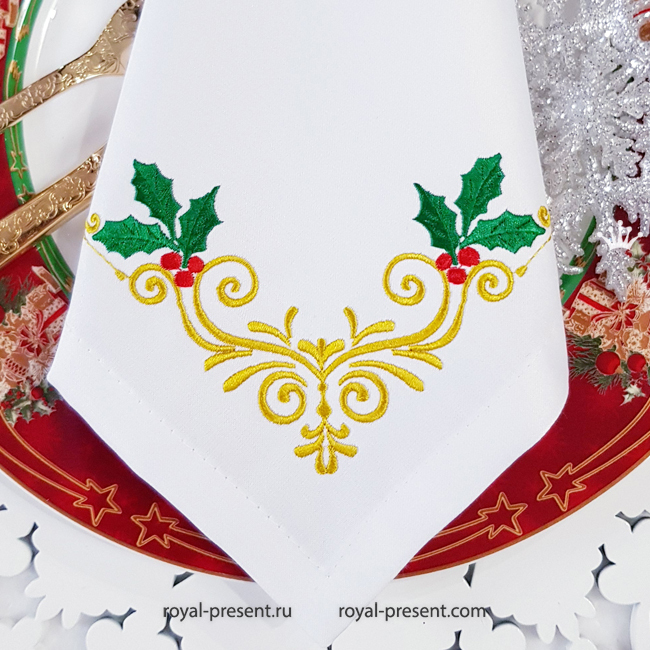
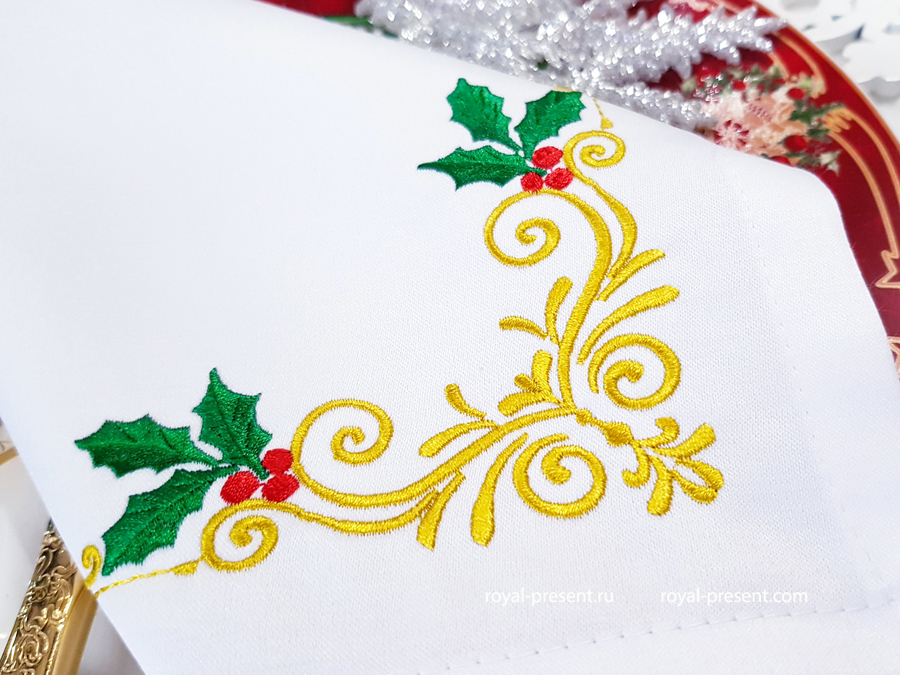
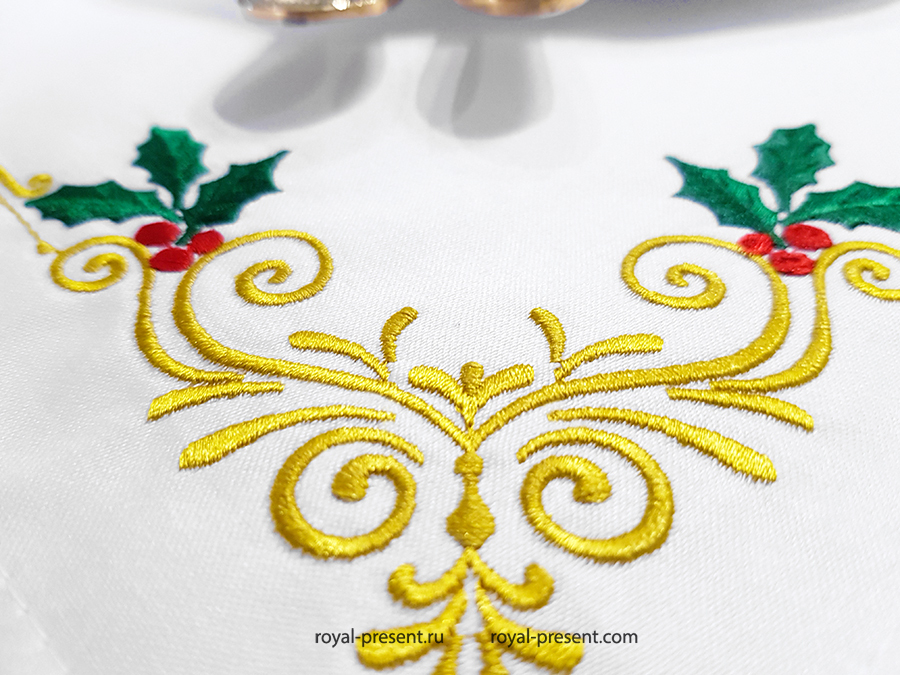
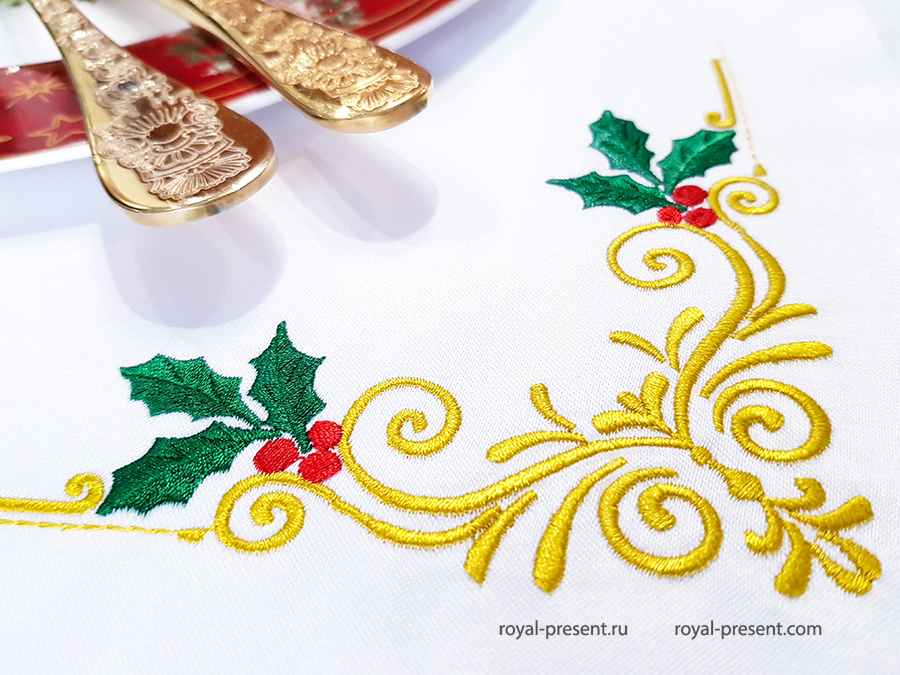
Size: 112.2x112.3 mm (4.42x4.42 "), Stitches: 6501
Size: 128.3x128.4 mm (5.05x5.06 "), Stitches: 7405
Size: 138.3x138.4 mm (5.44x5.45 "), Stitches: 7993
Formats: .pes, .pec, .hus, .vip, .dst, .exp, .sew, .exp, .dat, .vp3, .jef, xxx
How long will the embroidered item be in use?
If it’s going to be used a lot, then stabilizers of more permanent characters are a much better option. Such stabilizers will keep the look of the embroidery for a much longer time.
Amidst all the existing types of stabilizers, cut-away ones are undisputed champions with the support provided both during the work and afterward too. However, such their advantages come at a price: the stabilizer doesn’t offer the so-called “clean backside” as it remains there for good. If this is a problem, then adjust the choice of the backing accordingly.
Example: Choosing stabilizers for machine embroidery of towel and napkins. Clean backside for towels and napkins can be achieved either through the use of tear-away or wash-away backings. Otherwise, go for textile substitutions of regular stabilizers (e.g. organza).
Also, sometimes the edges of the remaining cut-away backing might be visible through the fabric. Here, think of semi-transparent cut-away stabilizers (e.g. Soft n’ Sheer by Gunold, No-show Polymesh by World Weidner, etc.)
Go on reading our blog Choosing stabilizers for machine embroidery. Part 2


 Get Sign-In Link
 Login with Google
 Login with Facebook
 Login with Amazon
 Login with Paypal