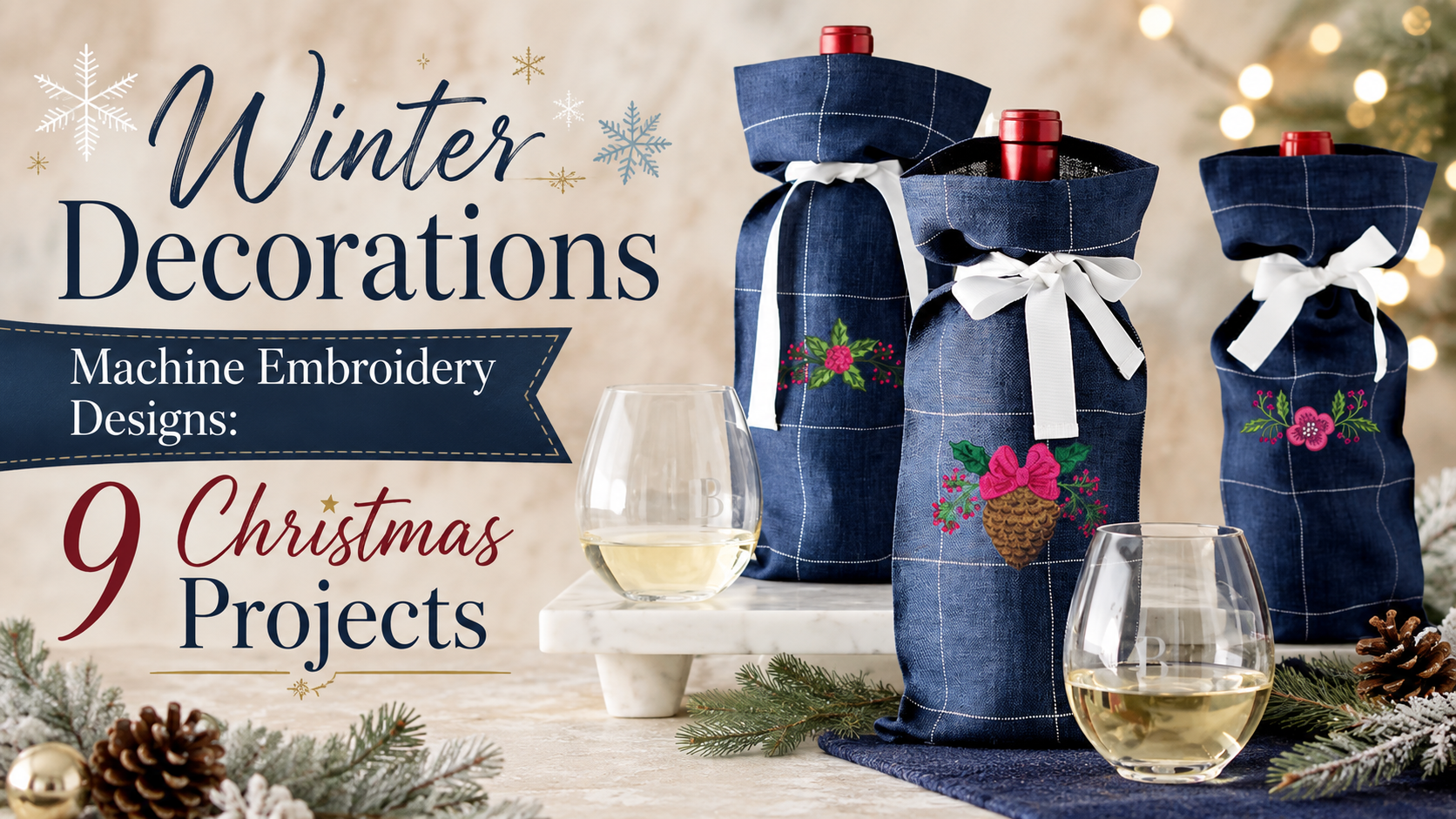
9 Winter Machine Embroidery Projects for Christmas Decor
Winter decorations machine embroidery designs become far more useful when they are planned as finished objects instead of isolated motifs. A small branch can anchor a wine bag, three rela...
Showing 1-13 of 13 results
This category contains digital machine embroidery designs for coordinated table settings: motifs for napkins, tablecloths and table runners, designs for placemats, appliqué, plus in-the-hoop placemats and coasters. Each product is a downloadable file for an embroidery machine; finished linens, fabric and tableware are not included. Exact design sizes, stitch counts, formats and contents are listed on each product page.
Tableware provides a visual brief for a table setting: colour relationships, the scale of the decoration, the rhythm around a plate and the balance between detailed and quiet areas. We translate that brief into textiles without tracing a pattern from a plate. Every collection receives its own composition, geometry and stitch plan, developed for thread direction, density, trims, colour changes, fabric behaviour and hoop limits.
The creative research may begin with historical ornament, architecture, botanical forms, regional craft or the etiquette of setting a table. The result is a group of original machine embroidery designs that can connect napkins, placemats, runners and coasters into one visual story while retaining an independent appearance.
| Digital design type | Suitable projects | Check before purchase |
|---|---|---|
| Standard machine embroidery | Napkins, tablecloths, table runners, sewn placemats, cushion covers and textile panels | Exact motif size, fabric weight, stabilizer and the machine's usable embroidery area |
| In-the-hoop project | ITH placemats for plates, mug mats and coasters assembled in the embroidery hoop | Full finished size, required hoop size and the construction sequence in the included instructions |
| Appliqué design | Graphic accents for napkins, runners, placemats, cushions and decorative panels | Appliqué fabric allowance, trimming method and stabilization required by the base fabric |
| Coordinating companions | A related group of placemats, napkin motifs, borders, corners and square ornaments | The contents of each listing, because companion designs may be sold as separate digital products |
To build a coordinated set, browse in-the-hoop machine embroidery designs, corner embroidery designs, machine embroidery borders and appliqué embroidery designs.
Tableware-inspired describes the styling brief, not a digital copy of a manufacturer's decoration. The drawing, composition and stitch program are created as independent machine embroidery designs and are intended to produce their own visual impression. Royal Present Embroidery products are not licensed merchandise, collaborations or official accessories for third-party tableware collections.
The collection concept is developed by Ludmila Konovalova, a machine embroidery designer with more than 30 years of embroidery experience. Her workflow combines original drawing, digitizing, stitch-technique selection and testing on an embroidery machine.
Winter decorations machine embroidery designs become far more useful when they are planned as finished objects instead of isolated motifs. A small branch can anchor a wine bag, three rela...

 Get Sign-In Link
 Login with Google
 Login with Facebook
 Login with Amazon
 Login with Paypal